

Mechanosensitive Ion Channels Regulate Tooth Development
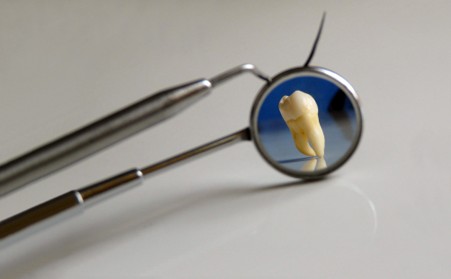
The mechanosensitive channels Piezo1 and Piezo2 mediate the terminal differentiation of odontoblasts into dentin-forming cells by modulating Wnt signaling.
The mechanosensitive Piezo channels regulate the terminal differentiation of odontoblasts into dentin-forming cells by modulating Wnt signaling
CHENGDU, SICHUAN, CHINA, September 30, 2026 /EINPresswire.com/ -- Dentin formation, a crucial process during tooth development, results from the secretion of organic matrix from specialized cells called odontoblasts. However, the roles of the mechanosensitive channels Piezo1 and Piezo2 in odontoblast differentiation are unclear. Now, researchers from the University of Maryland addressed this knowledge gap using Piezo1/Piezo2 conditional knockout mice. Piezo1/Piezo2 double knockout impaired odontoblast differentiation and Wnt signaling. This study indicated that Piezo1 and Piezo2 contribute to odontoblast terminal differentiation, at least in part, by modulating Wnt signaling.Tooth development involves several biological processes. The epithelial component of the primordial tooth germs forms the enamel (the hard outer covering of the teeth), while the mesenchymal component forms the dental pulp tissues (the central component of teeth comprising soft tissues with blood vessels and nerves). Cells in the outermost layer of the dental pulp undergo differentiation to form odontoblasts. These odontoblasts secrete organic matrix to give rise to the dentin, a hard calcified tissue that forms the bulk of the tooth structure. In addition to genetic factors, these developmental processes are regulated by non-genetic factors, such as biomechanical stimuli. Piezo1 and Piezo2, which are mechanical sensors expressed in odontoblasts, are involved in postnatal tooth development. However, the roles of Piezo1 and Piezo2 in the differentiation of odontoblasts into dentin-forming cells are unclear.
To address this knowledge gap, a research group, led by Professor Man-Kyo Chung and Dr. Xuguang Nie, from the University of Maryland Baltimore, USA, used genetic mouse models to determine the roles of Piezo1 and Piezo2 in odontoblast differentiation. The findings were published in Volume 18, Article number 61 of the International Journal of Oral Science on 10 Sept 2026. Explaining the rationale for the study, Prof. Chung remarks, “Although previous studies have reported that Piezo1 and Piezo2 are expressed in tooth forming cells, their roles in tooth development in vivo remain poorly understood. In this study, we used the conditional knockout (cKO) strategy to uncover the roles of Piezo1 and Piezo2 in tooth development, especially odontoblast differentiation.”
The researchers first established the Piezo1 cKO and Piezo2 cKO mouse models using the Wnt1-Cre2 system, which enables the deletion of target genes in cells of neural crest origin, such as odontoblasts. Tooth development was unaffected in both Piezo1 cKO and Piezo2 cKO mice. The functions of Piezo1 and Piezo2 are reported to be redundant in many tissues and biological processes. Hence, the researchers established the Piezo1/Piezo2 double knockout (dKO) model. At the embryonic stage, tooth development was not obviously affected in Piezo1/Piezo2 dKO mice. However, several changes were noted at the newborn stage. In particular, Piezo1/Piezo2 dKO mice exhibited decreased odontoblast height and expression of odontoblast differentiation-related proteins (dentine sialophosphoprotein (Dspp), alkaline phosphatase (Alpl), and collagen type 1 (Col1a1)), suggesting impairment of odontoblast differentiation. Piezo1/Piezo2 dKO mice did not survive beyond day 1 of birth. Of the most advanced stage of mouse survival, although dentin matrix was present in some areas, overall tooth development was atypical in Piezo1/Piezo2 dKO mice.
Wnt signaling regulates different processes of tooth development. Previous studies have reported that Wnt signaling is correlated with Piezo1 activity in multiple biological contexts. Thus, the researchers examined the expression of Wnt10a and β-catenin, which are the key components of Wnt signaling in the process odontoblast differentiation. The expression levels of both of these Wnt signaling-related factors were downregulated in Piezo1/Piezo2 dKO mice. Consistently, the expression of Axin1, the downstream target of β-catenin, was also suppressed in Piezo1/Piezo2 dKO mice. Exogenous supplementation of Wnt10a could partially restore odontoblast differentiation and Wnt signaling. These findings suggest that Piezo1 and Piezo2 regulate odontoblast differentiation by modulating Wnt signaling. Treating pregnant wild-type mice with Yoda1, a pharmacological activator of Piezo1, increased odontoblast differentiation, matrix deposition, and Wnt10a and β-catenin expression in the embryo. Thus, the study demonstrated the important roles of Piezo channels in terminal differentiation of odontoblasts.
Commenting on the application potential of the study findings, Dr. Nie remarked, “This is the first study to reveal the roles of Piezo1 and Piezo2 in odontoblast differentiation in an in vivo model. Our findings suggest the molecular links of Piezo1/Piezo2 with Wnt signaling, which can be potentially harnessed to develop therapeutic strategies for dentin malformations or inherited dentin defects.”
***
Reference
Title of original paper: Piezo channels contribute to the terminal cytodifferentiation of odontoblasts via modulation of canonical Wnt signaling
Journal: International Journal of Oral Science
DOI: 10.1038/s41368-026-00461-4
About University of Maryland, Baltimore
The University of Maryland, Baltimore (UMB),
founded in 1807, is Maryland's public academic health, law, and human services university. Located in downtown Baltimore, UMB comprises seven professional schools, including Dentistry, Medicine, Nursing, Pharmacy, Law, Social Work, and Graduate School. Its faculty conducts innovative research in biomedical sciences, neuroscience, public health, and related disciplines while collaborating with healthcare systems, government agencies, and industry partners to improve the lives of people in Maryland and beyond.
Website: https://www.umaryland.edu/
About Prof. Man-Kyo Chung from the University of Maryland, Baltimore
Man-Kyo Chung, DMD PhD, is a Professor in the Department of Pain and Neural Sciences at the School of Dentistry, University of Maryland, Baltimore. He also co-directs the University of Maryland Center to Advance Chronic Pain Research. Prof. Chung earned his DMD and PhD from Kyung Hee University and completed postdoctoral training at Johns Hopkins University. His research interests are mainly focused on understanding fundamental mechanisms underlying how sensory neurons regulate pain, inflammation, and tissue remodeling in dental, oral, and craniofacial tissues.
Funding information
This work was supported by the National Institutes of Health grant R35 DE030045 to MKC. Kelley Huang is supported by R25 DE32530 Maryland Program in Dental Research Experience.
Yini Bao
The International Journal of Oral Science
+862885546461 ext.
ijos@scu.edu.cn
Visit us on social media:
X
Legal Disclaimer:
EIN Presswire provides this news content "as is" without warranty of any kind. We do not accept any responsibility or liability for the accuracy, content, images, videos, licenses, completeness, legality, or reliability of the information contained in this article. If you have any complaints or copyright issues related to this article, kindly contact the author above.
