

Advanced Lead Thyroid Shield Company: How DOUBLE EAGLE Integrates ISO Standards for Global Shielding Trends
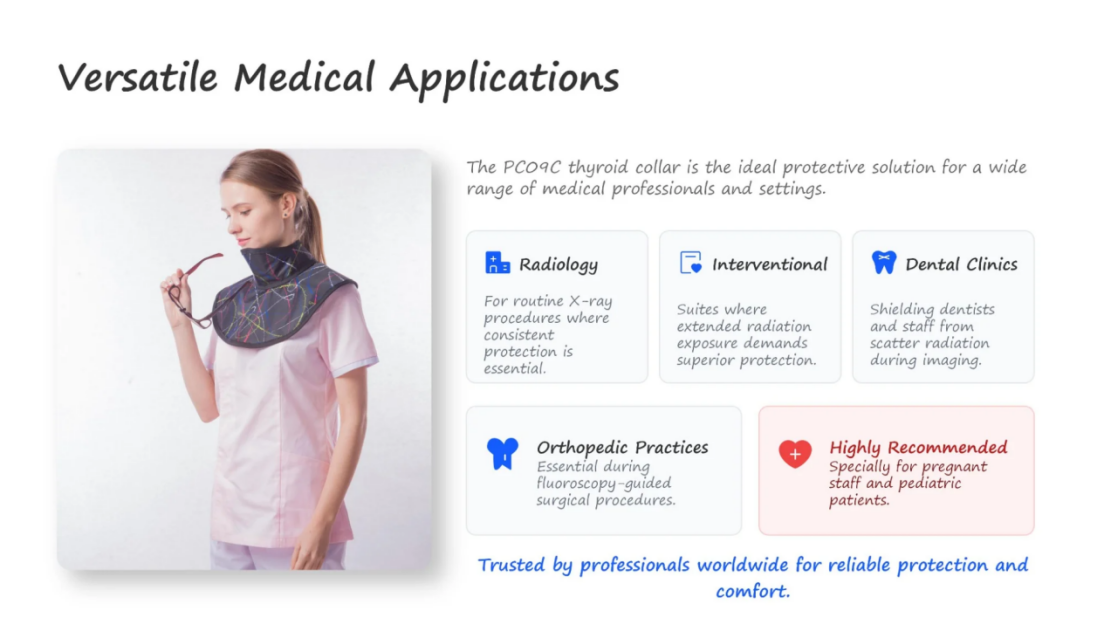
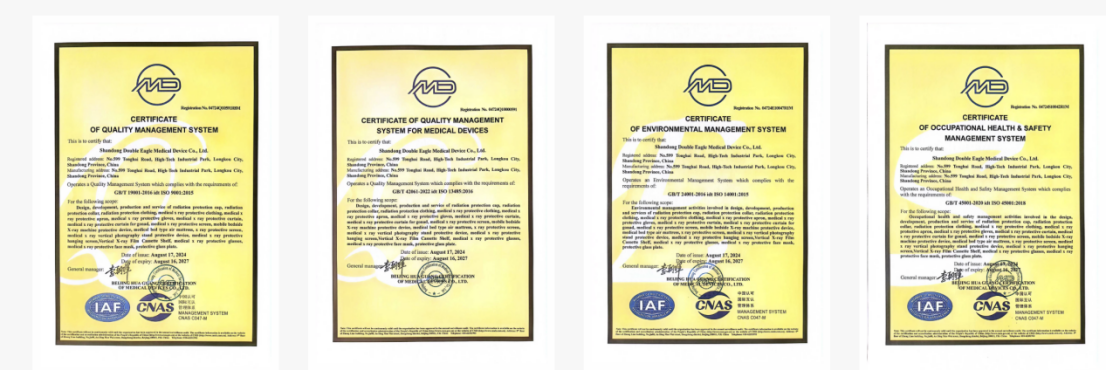
As an Advanced Lead Thyroid Shield Company, DOUBLE EAGLE exemplifies how the rigorous integration of international standards can redefine global radiation shielding trends. Through a meticulous alignment with multiple International Organization for Standardization (ISO) benchmarks, the company translates complex regulatory guidelines into life-saving material innovations. A prime example of this methodology is seen in specialized protective garments like the Lead Thyroid Shield, which are engineered to shield the vulnerable thyroid area from scatter radiation without compromising clinical mobility or operator comfort.
I. ISO 13485: Driving Medical Device Quality Management and Clinical Safety
The medical device industry operates under stringent regulatory oversight where material consistency can directly impact human health. ISO 13485 stands as a globally recognized benchmark for quality management systems specific to medical devices. For a specialized manufacturer, achieving and maintaining this certification is not merely a badge of compliance; it governs every phase of the product lifecycle, from initial polymer blending to final stitching.
In the production of personal radiation protection, the homogeneity of the protective medium is paramount. ISO 13485 protocols dictate rigorous traceability of raw materials and strict control over manufacturing tolerances. This systematic approach ensures that every Lead Thyroid Shield produced contains an even, uncompromised distribution of lead particles within its rubber matrix. In clinical environments, scatter radiation does not strike from a single predictable angle. Therefore, any microscopic void or inconsistent thickness in the shielding material poses a direct hazard to medical staff. By adhering to ISO 13485, the manufacturing process incorporates automated thickness gauging and automated radiometric testing, verifying that nearly every square millimeter delivers the specified lead equivalence within industry tolerances. This standard also establishes robust post-market surveillance systems, ensuring that feedback from hospitals and radiological departments is continuously channeled back into engineering teams for iterative product refinement.
II. ISO 9001: Enhancing Operational Excellence and Material Innovation
While ISO 13485 focuses heavily on safety and regulatory compliance within the medical domain, ISO 9001 provides the overarching framework for continuous process improvement, customer satisfaction, and operational efficiency. The integration of ISO 9001 enables a manufacturing ecosystem where technical innovation is balanced with high-volume reliability.
Within this framework, material development ceases to be an experimental venture and becomes a highly controlled, predictable outcome. For instance, the transition from conventional, rigid lead sheets to modern, ultra-soft protective lead rubber sheets requires precise adjustments in vulcanization temperatures, plasticizer ratios, and compounding sequences. ISO 9001 principles demand strict statistical process control (SPC) over these parameters. This operational discipline directly enables the refinement of advanced products such as the PC09C Lead Rubber Thyroid Collar (American Style). This specific model showcases how operational excellence translates into physical performance: it utilizes an optimized composite structure where high-purity lead particles are tightly bound within a flexible elastomer compound. This eliminates the historic trade-off between weight and flexibility, allowing the collar to drape naturally around the neck while maintaining a high attenuation profile. The systematic quality control mandated by ISO 9001 ensures that the mechanical integrity of these flexible sheets remains intact over thousands of flex cycles, preventing the cracking and degradation common in lower-grade protective wear.
III. ISO 14001: Standardizing Environmental Sustainability in Heavy Metal Manufacturing
The utilization of lead (Pb) as a primary radiation shielding material carries significant environmental responsibilities. Lead is a heavy metal that requires careful handling during sourcing, manufacturing, and eventual disposal. ISO 14001 establishes the international criteria for an effective environmental management system (EMS), providing a structured roadmap to minimize ecological footprints.
By integrating ISO 14001 into its core manufacturing philosophy, an advanced protection enterprise establishes a closed-loop system for heavy metal handling. During the shearing and shaping of lead rubber sheets, the generation of scrap material is inevitable. Under an ISO 14001 compliant system, over 99% of production off-cuts are captured, processed, and safely recycled back into the primary compounding stage, ensuring no detectable lead contamination leaks into the municipal waste stream. Furthermore, the standard drives the reduction of volatile organic compounds (VOCs) and hazardous solvents traditionally used in rubber bonding and textile lamination. The outer coverings of modern thyroid shields are treated with solvent-free, antibacterial polyurethane coatings that are safe for both the wearer and the environment. This commitment to green manufacturing matches the sustainability goals of modern healthcare networks, which increasingly prioritize environmentally responsible vendors during procurement processes.
IV. ISO 45001: Prioritizing Occupational Health and Safety on the Production Floor
An organization dedicated to protecting medical personnel from radiation must logically extend that same protective ethos to its own workforce. ISO 45001 focuses on occupational health and safety (OH&S), providing a comprehensive framework to mitigate workplace hazards, reduce injuries, and ensure optimal working conditions.
In a facility that processes heavy metals and industrial rubber, the risks range from ergonomic strains during material handling to airborne particulates during raw material mixing. Implementing ISO 45001 involves the installation of advanced negative-pressure ventilation systems, localized dust extraction hoods, and automated material transport mechanisms that prevent direct human exposure to raw lead oxides. Regular biological monitoring, air quality sampling, and strict personal protective equipment (PPE) protocols are embedded into the daily operational workflow. This comprehensive safety culture minimizes downtime caused by occupational illness and boosts workforce morale. When production technicians work in a safe, ergonomically optimized environment, their precision increases. This directly reflects in the craftsmanship of the final product—seen in the flawless edge binding, reinforced hook-and-loop closures, and double-stitched seams of premium thyroid shields, which are vital for maintaining structural integrity under heavy daily clinical use.
V. Product Case Analysis: Technical Specifications of the PC09C Lead Rubber Thyroid Collar
To understand how these four pillars of ISO standardization converge into a tangible clinical asset, one must examine the specific engineering characteristics of the PC09C Lead Rubber Thyroid Collar (American Style). This product represents a pinnacle in ergonomic thyroid protection, designed specifically to meet the high-demand environments of modern interventional radiology suites.
The PC09C model features an anatomical contouring that conforms precisely to the human neck geometry, minimizing the vulnerable gaps at the sternal notch and the lateral margins of the throat. From a technical perspective, its core performance is defined by its attenuation capabilities:
Lead Equivalence Options: Available in standard 0.35mm Pb and 0.50mm Pb configurations, allowing facilities to select the appropriate protection level based on the specific KVp ranges of their imaging equipment.
Material Composition: It incorporates the proprietary ultra-thin, high-flexibility lead rubber sheet technology. This allows the collar to remain incredibly supple, reducing neck fatigue during long, multi-hour surgical procedures.
Outer Shell Architecture: Covered in high-durability, water-resistant fabrics that resist fluid penetration, including blood and contrast media. The surface can withstand rigorous decontamination protocols using hospital-grade disinfectants without cracking or color fading.
Closure Mechanism: Engineered with a premium, adjustable hook-and-loop fastening system positioned at the rear. This design ensures a secure, personalized fit for a wide range of neck sizes, preventing the collar from slipping during active clinical movements.
By combining these technical parameters with the strict quality assurances of ISO 9001 and ISO 13485, the PC09C collar delivers consistent, uncompromised performance, mitigating long-term radiation risks for operators who spend hours under fluoroscopic guidance.
Global Trends and the Vision for Advanced Radiation Protection
The global market for radiation shielding is undergoing a profound structural shift. Historically, protection was heavy, stiff, and cumbersome. Modern clinical trends, however, demand multi-functional garments that support rapid movement, offer long-term comfort, and maintain absolute safety. Furthermore, healthcare institutions are increasingly demanding transparency regarding the materials used, the ethical conditions of production, and the environmental impact of the manufacturing entities.
By harmonizing the specialized requirements of medical manufacturing (ISO 13485), general operational excellence (ISO 9001), ecological care (ISO 14001), and worker safety (ISO 45001), advanced manufacturers are perfectly positioned to lead this global market evolution. This comprehensive compliance infrastructure ensures that every shield exported to international markets meets or exceeds local regulatory requirements, whether in Europe, the Americas, or the Asia-Pacific region. As medical technology continues to advance toward higher-energy imaging and minimally invasive interventions, the fusion of advanced material science and systematic quality frameworks will remain the ultimate benchmark for excellence in radiation protection.
For more detailed technical documentation and to view the complete range of diagnostic protection solutions, please visit the official corporate portal: https://www.doubleeaglexray.com
Shandong Double Eagle Medical Device Co., Ltd.
Shandong Double Eagle Medical Device Co., Ltd.
email us here
Legal Disclaimer:
EIN Presswire provides this news content "as is" without warranty of any kind. We do not accept any responsibility or liability for the accuracy, content, images, videos, licenses, completeness, legality, or reliability of the information contained in this article. If you have any complaints or copyright issues related to this article, kindly contact the author above.
